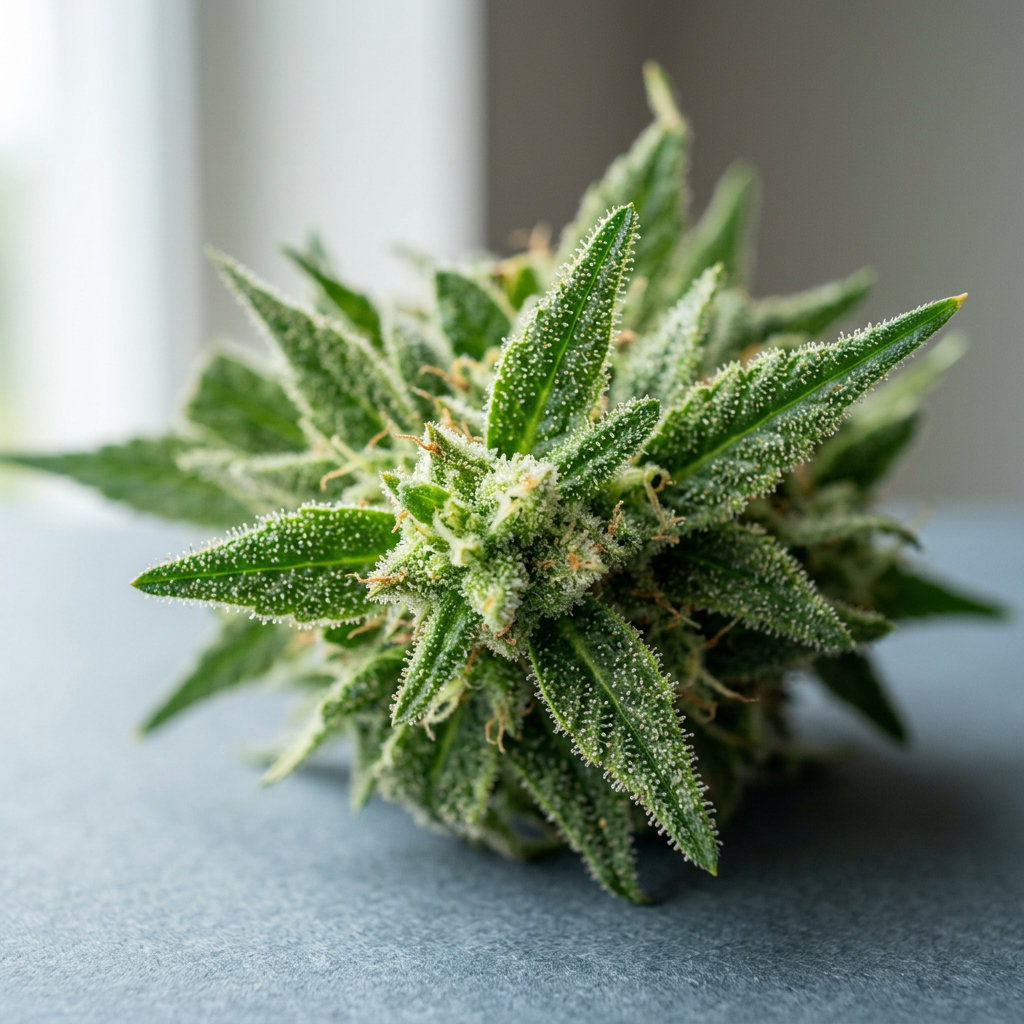
THC and THCA sound alike, but they aren’t the same thing. THCA is the raw, acidic form that cannabis plants produce naturally. THC is what it becomes once it’s heated.
Why heat matters
Fresh, unheated cannabis is rich in THCA and contains very little THC. Heating it (by smoking, vaping, dabbing, or baking) triggers a chemical reaction called decarboxylation, which converts THCA into THC. THC is the form that causes the familiar high. Eating raw cannabis or juicing it doesn’t produce that effect in the same way. Gummies and other edibles are made with THC that’s already been activated, so they work through digestion instead.
Reading a label
Because THCA becomes THC when heated, labels often list “total THC.” The formula is THC + (THCA × 0.877). The 0.877 accounts for the small amount of weight lost in the conversion. So a flower listing 25% THCA and almost no THC has roughly 22% total THC. Buying oil instead? See how to read a vape cartridge label.
The legal gray area
Some hemp-derived THCA flower is sold outside dispensaries because it tests low in THC before heating. Laws on this are unsettled and changing, and they differ by state, so check current rules where you live.
Research on THCA on its own is still early, so it’s best not to rely on claims about what it does.